Bio
Ph.D. candidate in ICT at Sapienza University of Rome, designing scheduling policies that keep large-scale clusters busy without keeping users waiting.
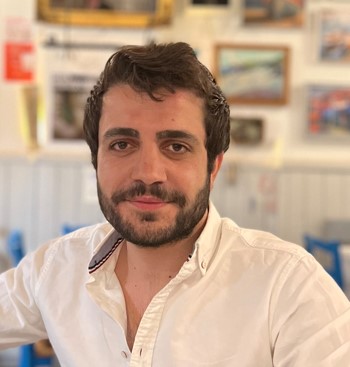
- Position Ph.D. Candidate, Sapienza University of Rome (DIET)
- Advisor Prof. Andrea Baiocchi
- Email

- Location NetLab · DIET, Via Eudossiana 18, 00184 Roma
- Profiles Google Scholar · LinkedIn · GitHub
My research starts from a question that looks simple but sits at the heart of modern computing: how do you keep a large-scale cluster busy without keeping users waiting? Cloud data centers, HPC systems, and now the GPU fleets that serve AI models all face this tension. I design dispatching and scheduling policies that are simple enough to deploy in production, yet strong enough to approach optimal performance.
What drives me is the gap between theory and practice. Classical results on optimal scheduling usually assume that job sizes are known in advance, information that real data centers rarely have. I therefore focus on non-size-aware policies for multiserver job systems, grounded in queueing theory and validated against production traces from Google Borg and Alibaba through discrete-event simulation and hands-on benchmarking.
Recently, with the shift from cloud data centers to AI data centers, I have extended my work to AI infrastructure. The number of AI models, especially large language models, is growing rapidly, and different models are specialized for different tasks. As a result, we need to serve inference for many different models hosted on the same GPU or physical machine. The question then becomes how multiple large language models can share a single GPU server, when it is worth preempting or offloading work, and what that costs in energy and delay. I also study connected-vehicle communication, asking how quickly safety-critical information can travel between vehicles and what "fresh enough" really means as networks evolve toward 6G.
My path to research has not been a straight line: an industrial engineering degree in Izmir, six years building ad-analytics pipelines and leading a data team at Compulse in San Francisco, and then Rome for an M.Sc. in Data Science (110/110) and the Ph.D. That industry experience still shapes how I work, I care about systems that hold up under real load, not just models that look good on paper.
My work is deeply collaborative. I was a visiting researcher at the IMDEA Networks Institute in Madrid with Prof. Marco Ajmone Marsan, and I have worked with groups at KTH, the University of Torino, LIST, and KIT. Along the way I have mentored M.Sc. students (two of whom have graduated), served on conference program committees, and won a few hackathons, including first prize at HackUPC.